Solo Product Designer
8 Months
Figma, FigJam, Mobbin
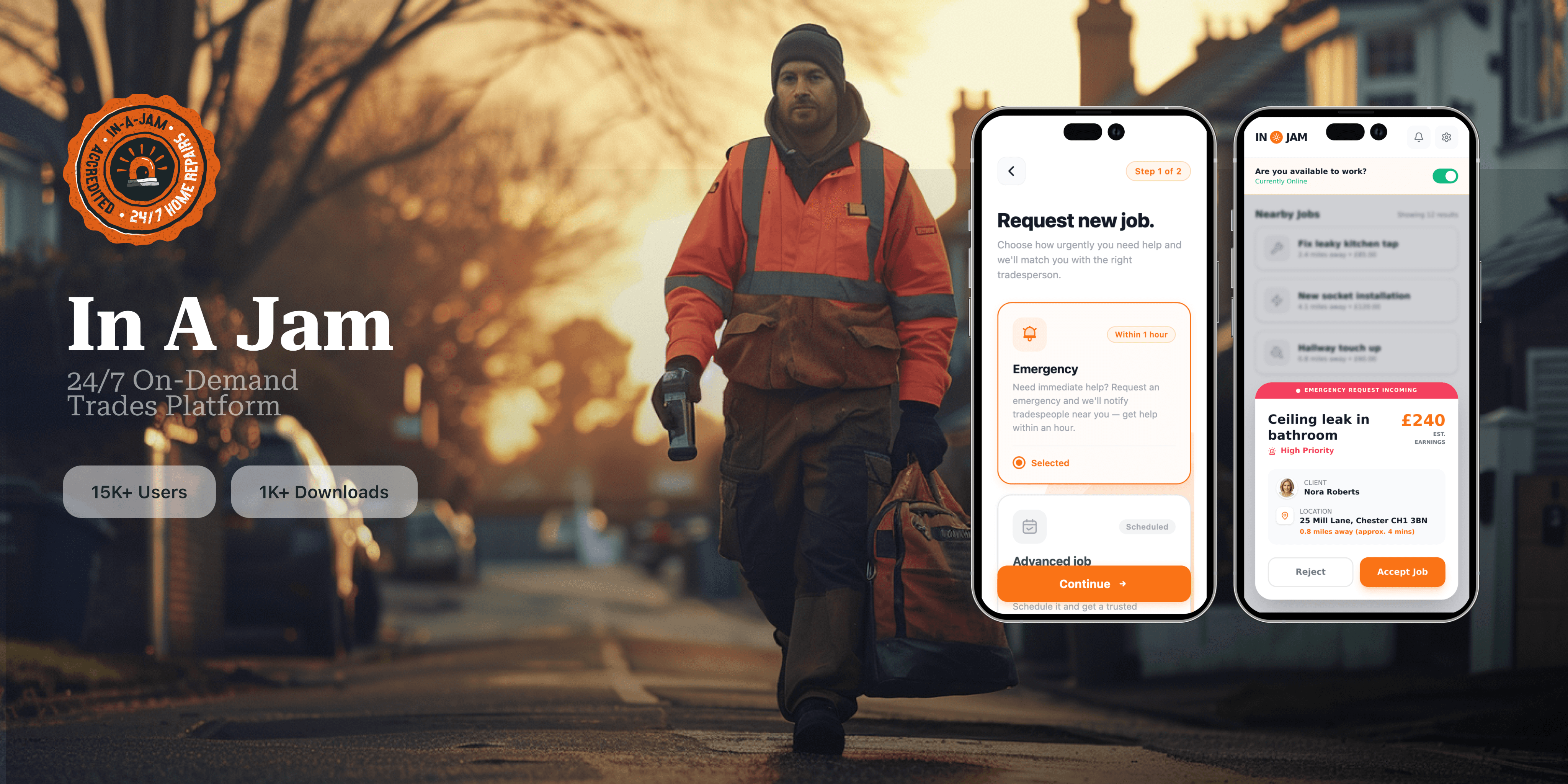
15K+ users · 1K+ downloads · Live on iOS & Android
Every week in the UK, thousands of homeowners face emergencies they can't solve — a ceiling leak, a broken boiler, a faulty fuse box — and no reliable way to find trusted help fast. Meanwhile, skilled tradespeople sit idle between jobs, missing work that's literally around the corner.
Paul White, Founder · 40 years in the trades
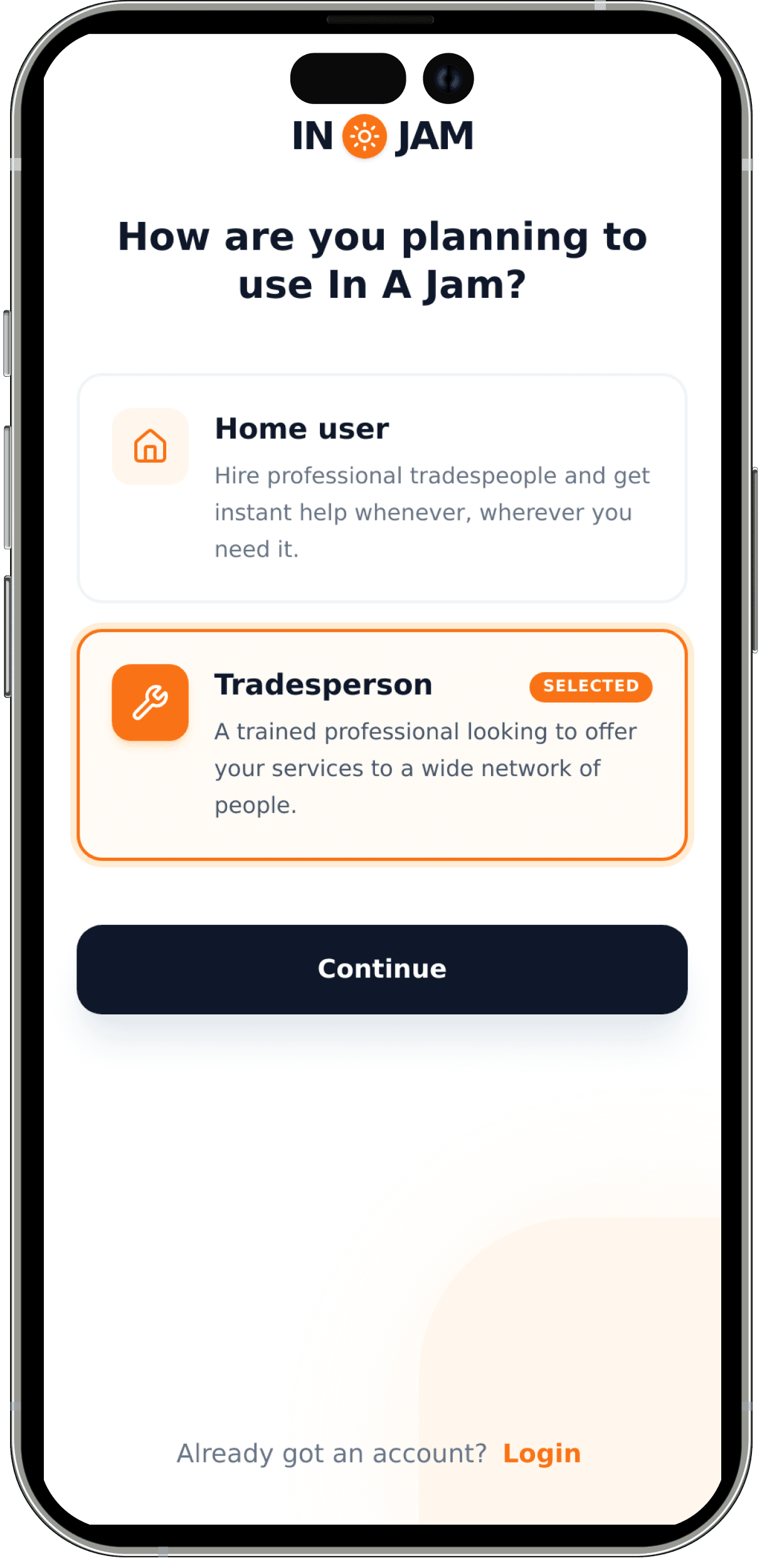
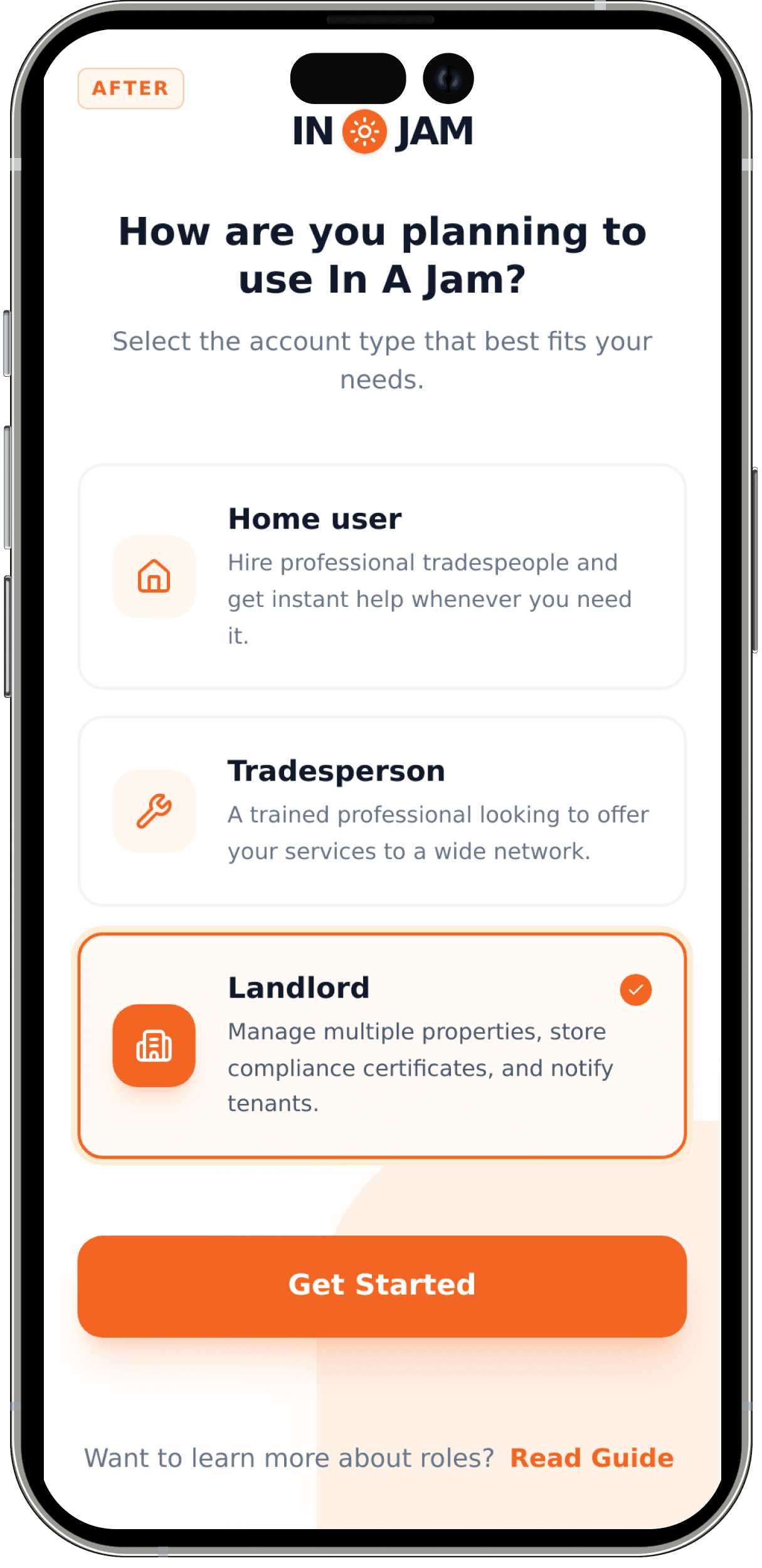
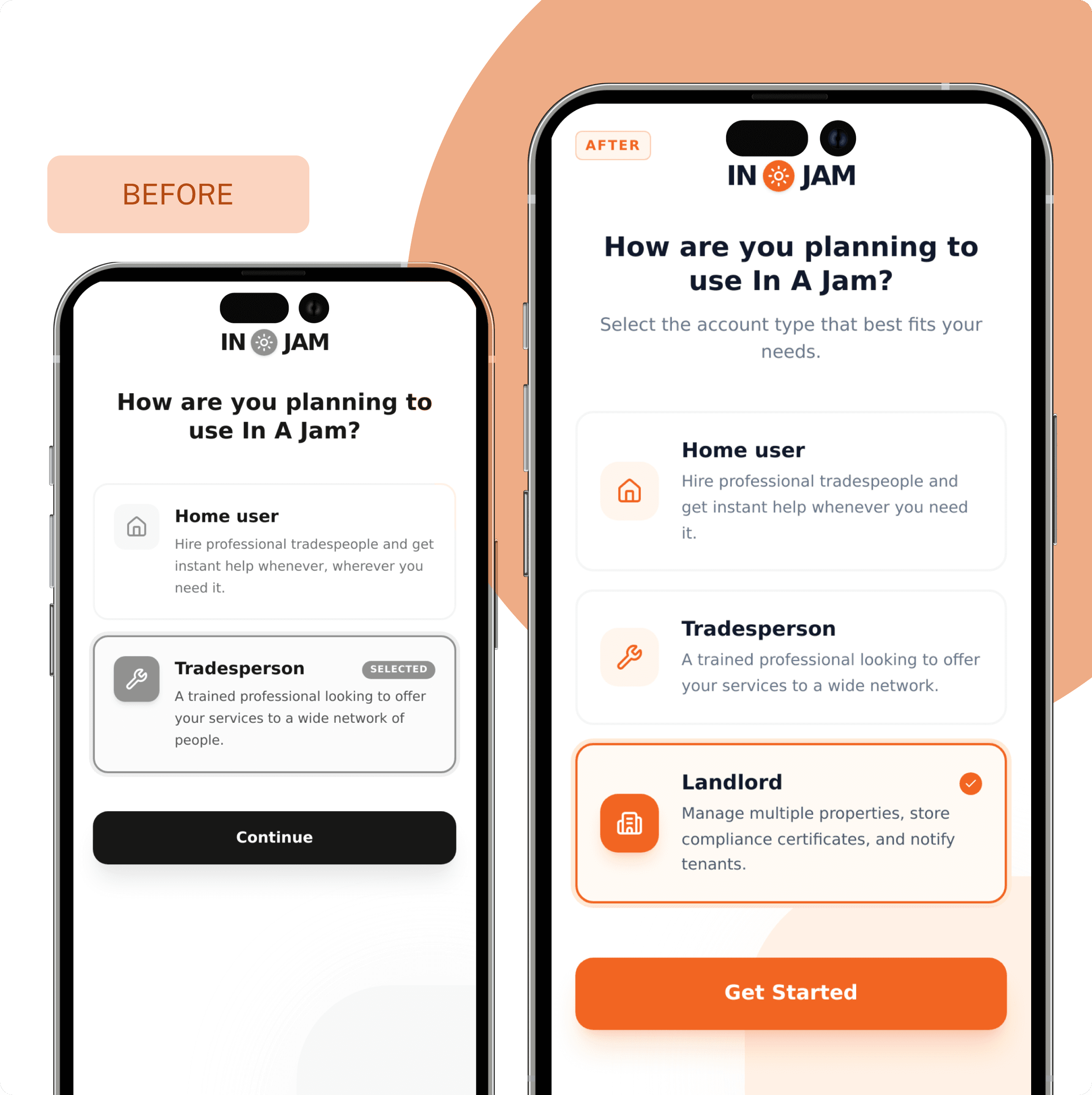
The brief I inherited was thin. It listed features but didn't account for the fact that homeowners and landlords have fundamentally different needs. A homeowner needs a plumber fast. A landlord needs certificate tracking, tenant notifications, multi-property management, and UK compliance. Treating them as one user type would have broken the product before it launched.
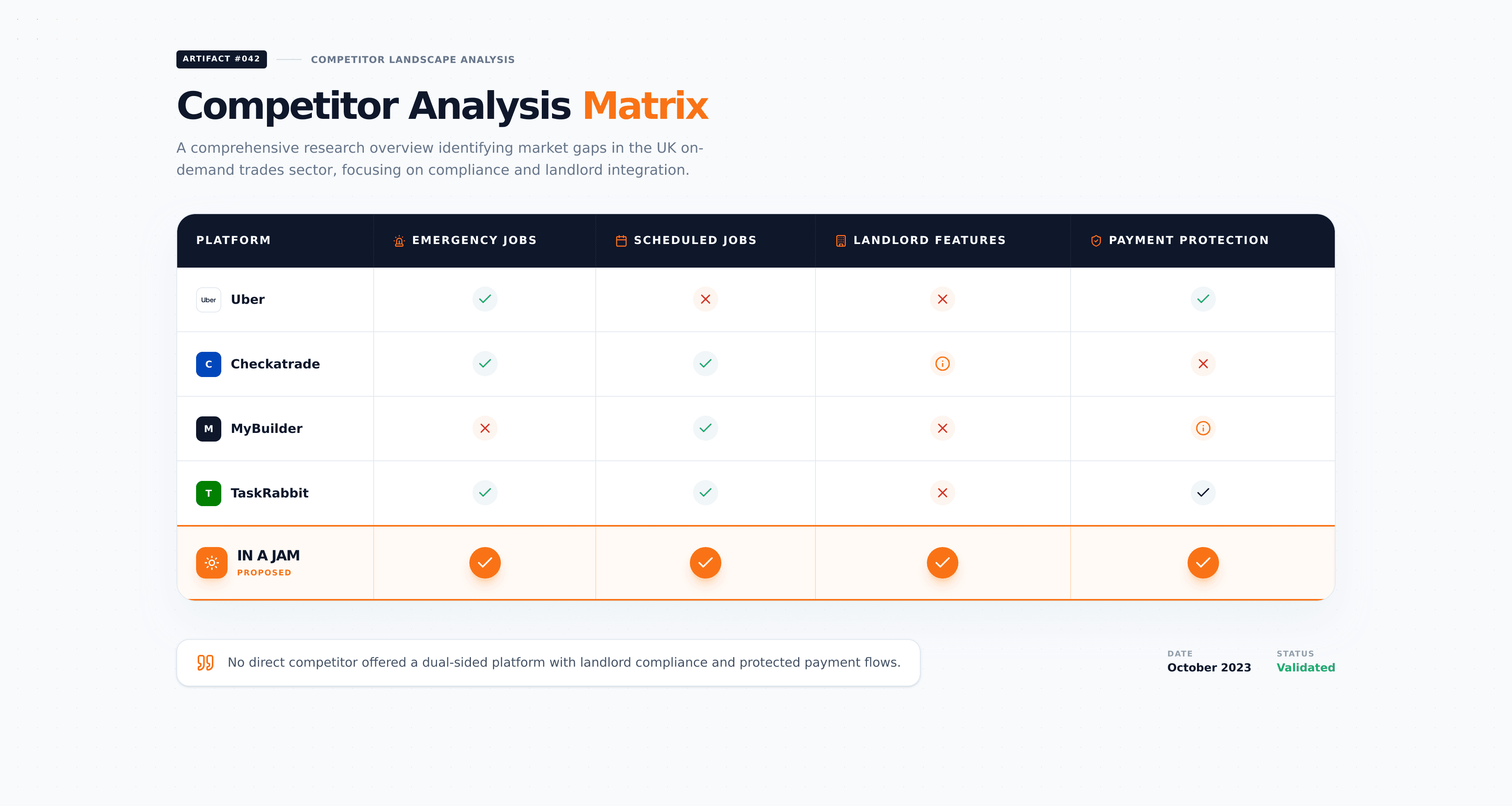
There was no direct competitor to benchmark against. Instead I studied adjacent products on Mobbin and downloaded apps solving similar problems differently — paying close attention to how on-demand platforms like Uber handled matching, payment timing, and trust between strangers.
Paul and I established a clear working agreement: he was the trades expert, I was the design expert. He taught me how UK tradespeople actually work. I translated that into product logic.

1. Three flows, not two
What started as trades and users became three once I mapped the landlord journey properly. Landlords switch between properties, notify tenants, store compliance certificates, and access specialist services like renewals. I presented the third flow to Paul as a logical next step.
2. Solving the payment timing problem
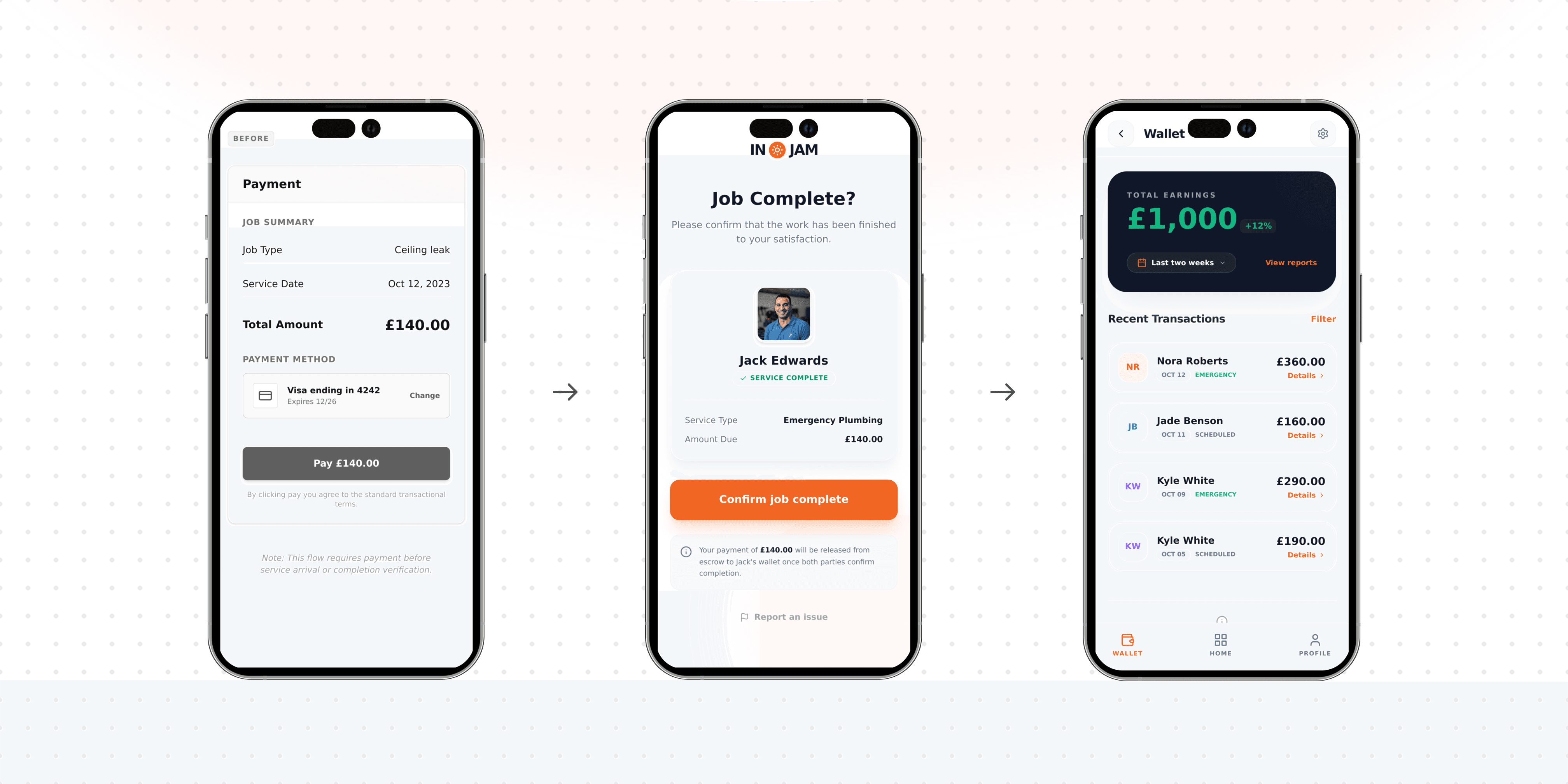
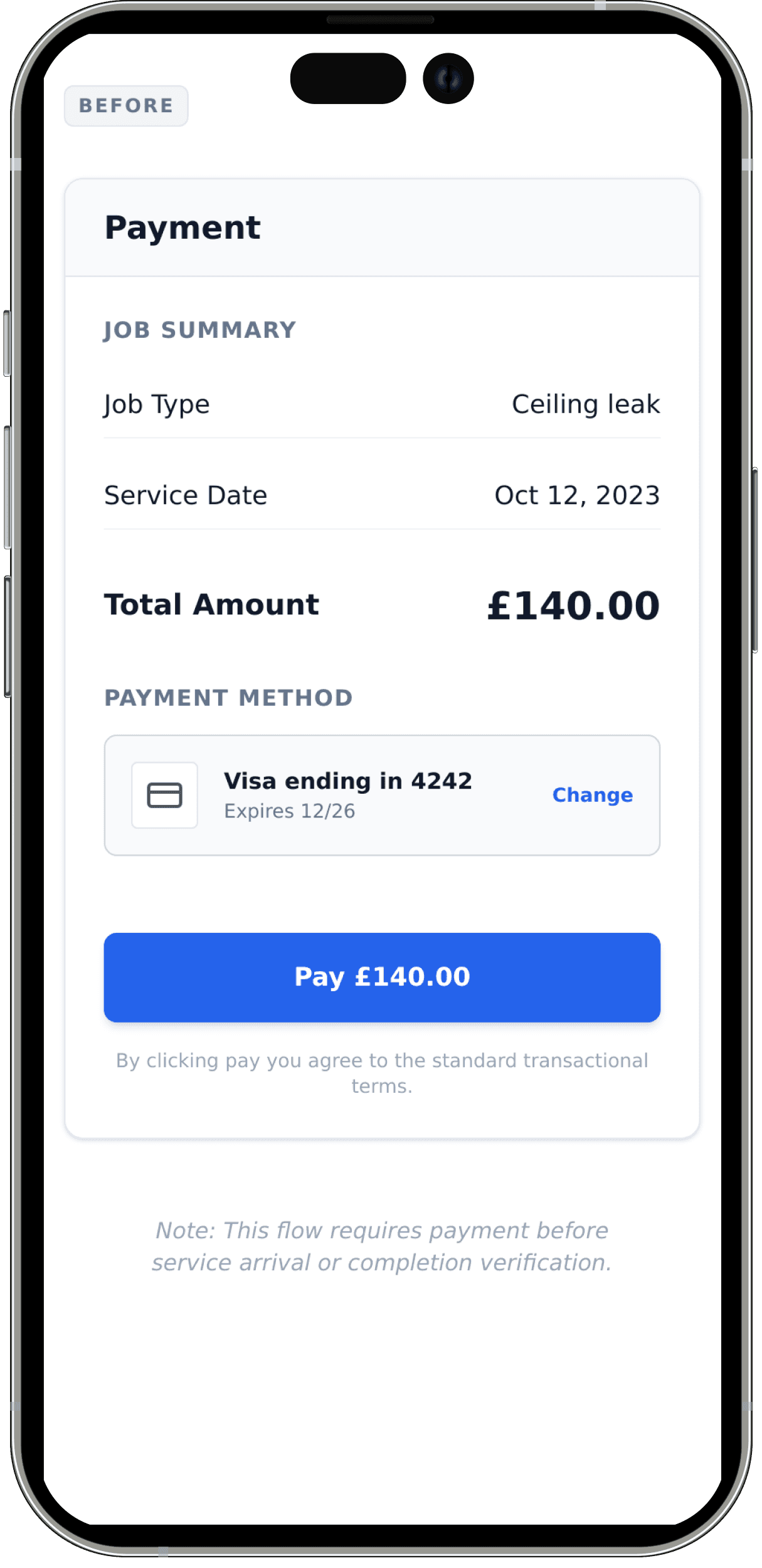
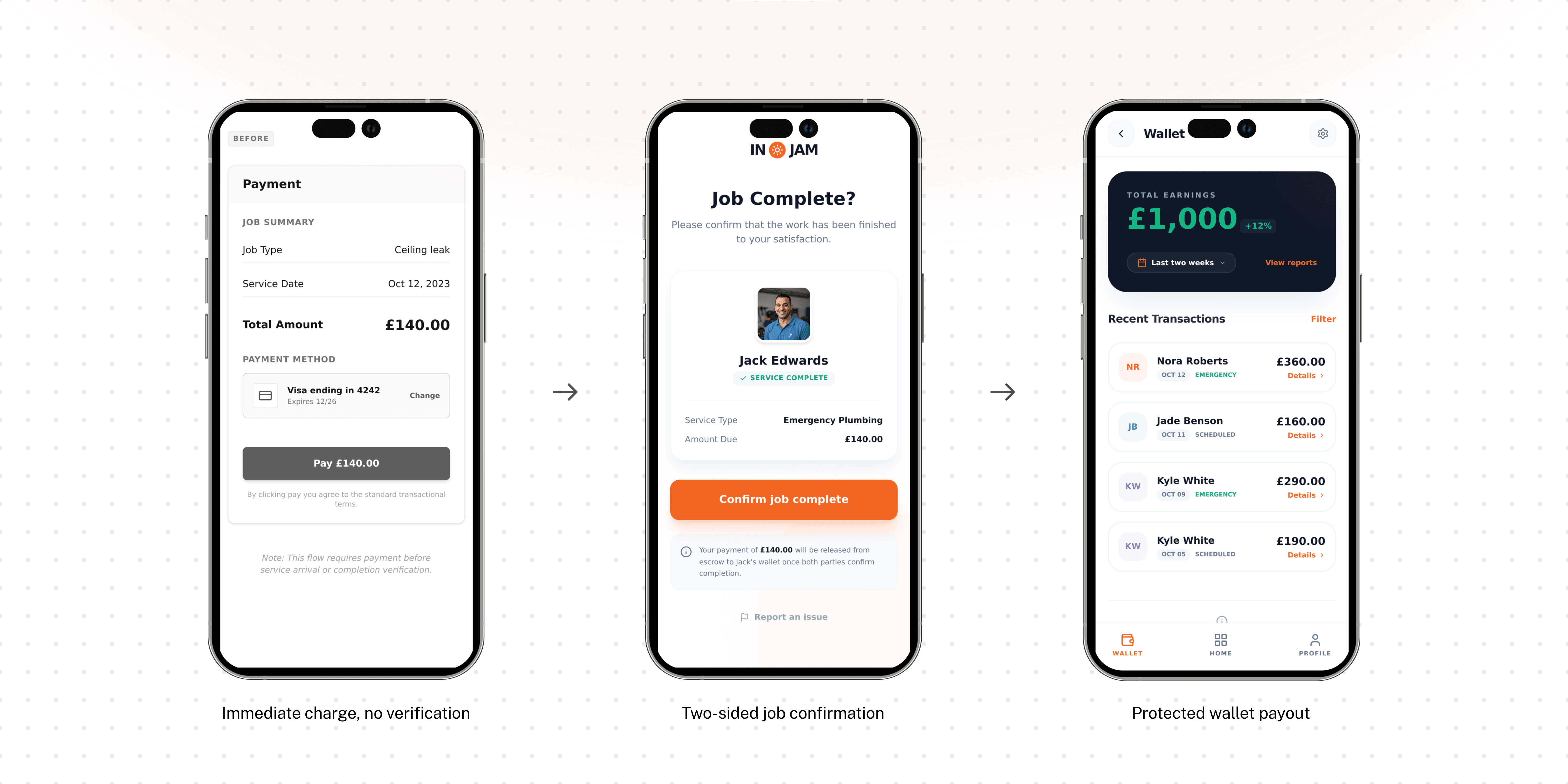
Payment in a two-sided marketplace is a trust problem before it's a technical one. Charge too early and the homeowner feels exposed. Release too late and the tradesperson feels exploited. Get it wrong on either side and the platform loses both users at once.
We studied how Uber handled this and built our own version for a higher-stakes context — a stranger entering your home to fix something urgent isn't quite the same as a taxi ride.
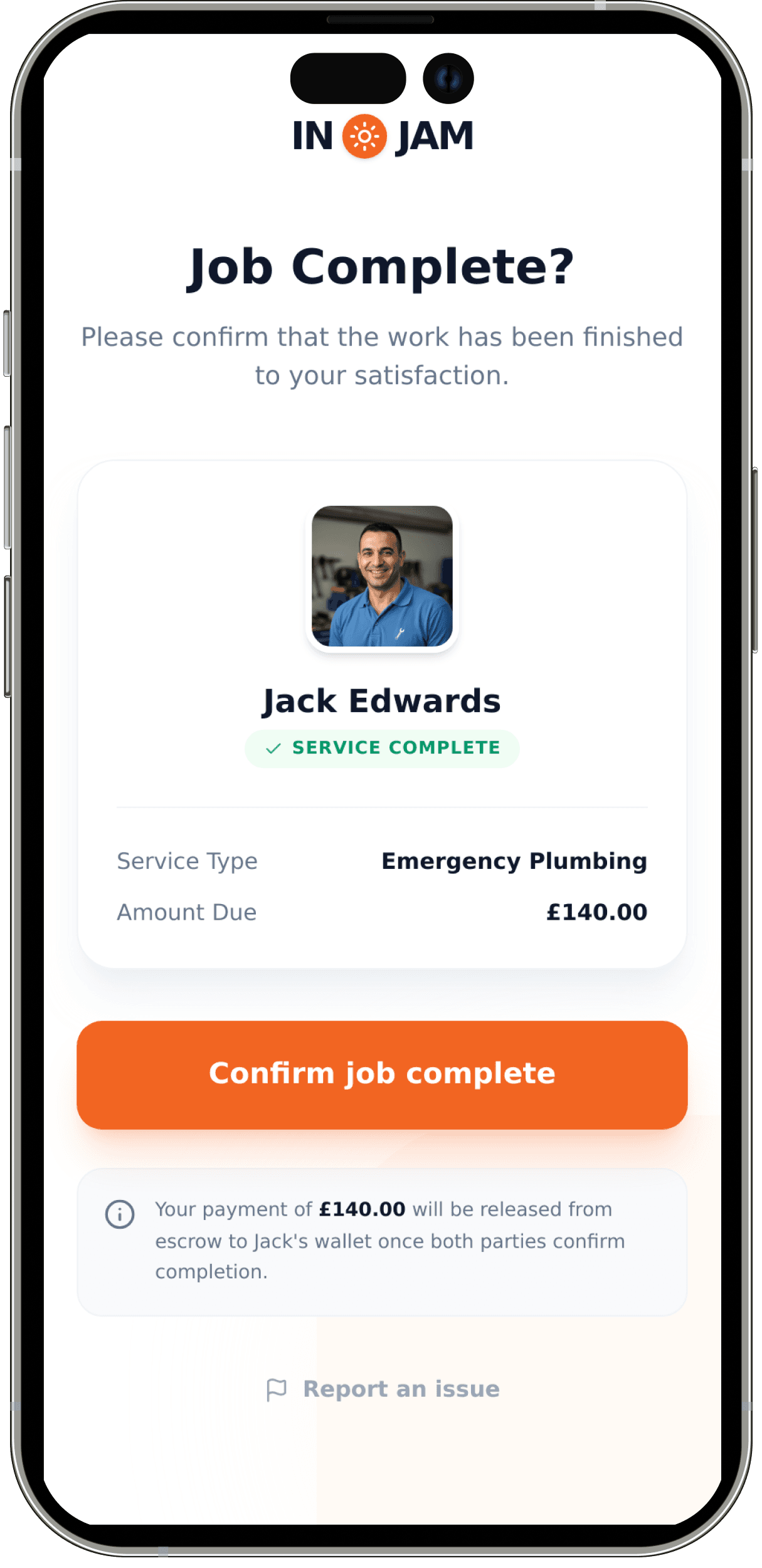
The solution had four stages:
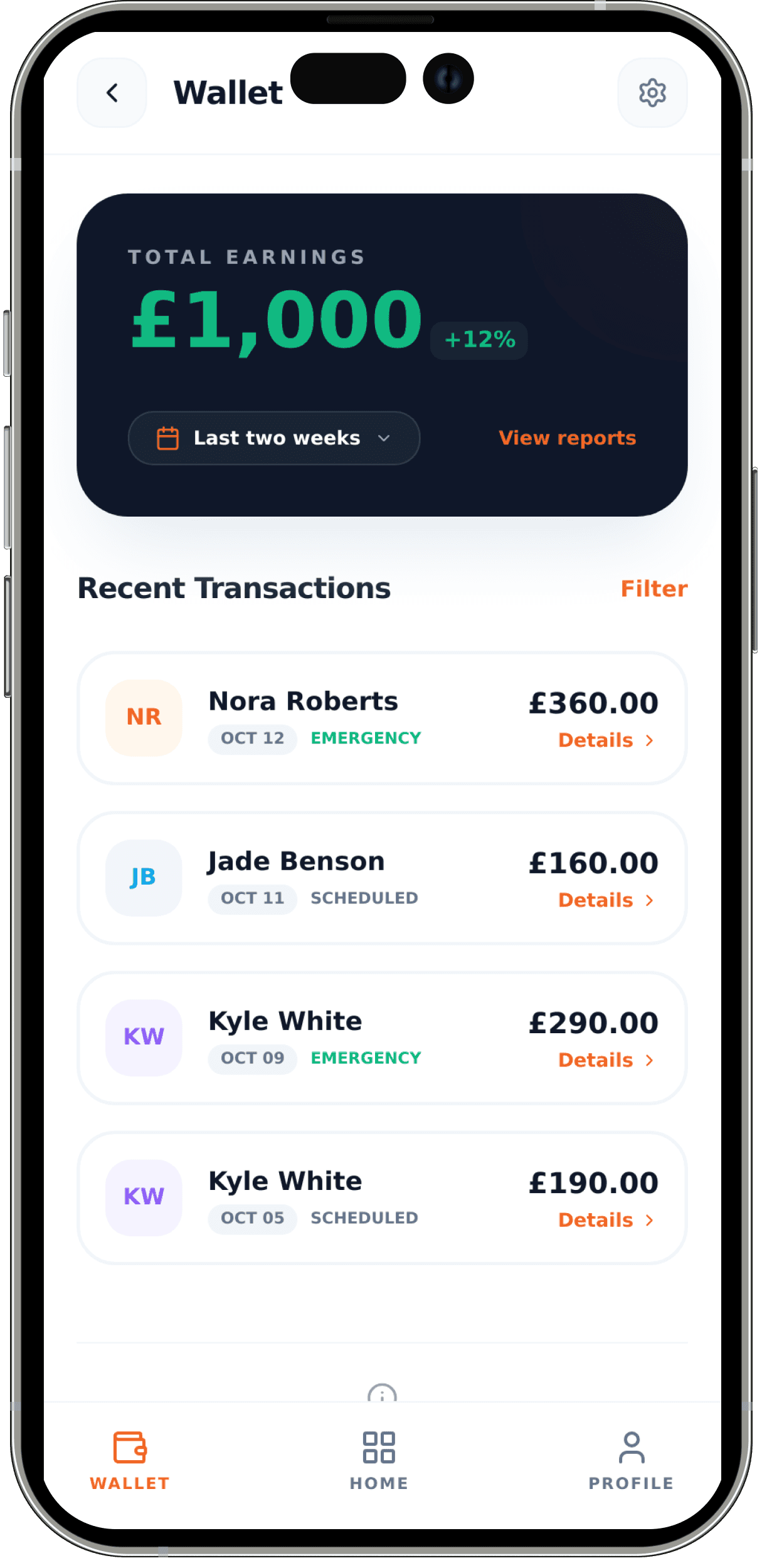
The homeowner is quoted upfront so there are no surprises. Payment is held in escrow after booking, not charged immediately. It's only released to the tradesperson's wallet once both parties confirm the job is complete. And if anything goes wrong, a dispute system protects both sides before any money moves.
Fortnightly payouts gave tradespeople predictability without tying up their earnings indefinitely.

3. Translating a physical brand to mobile
The In A Jam brand was built to live on hi-vis jackets, van signage, and printed materials — contexts where bold, high-contrast, and oversized is exactly right. Bringing it to a 390px screen required a different kind of thinking.
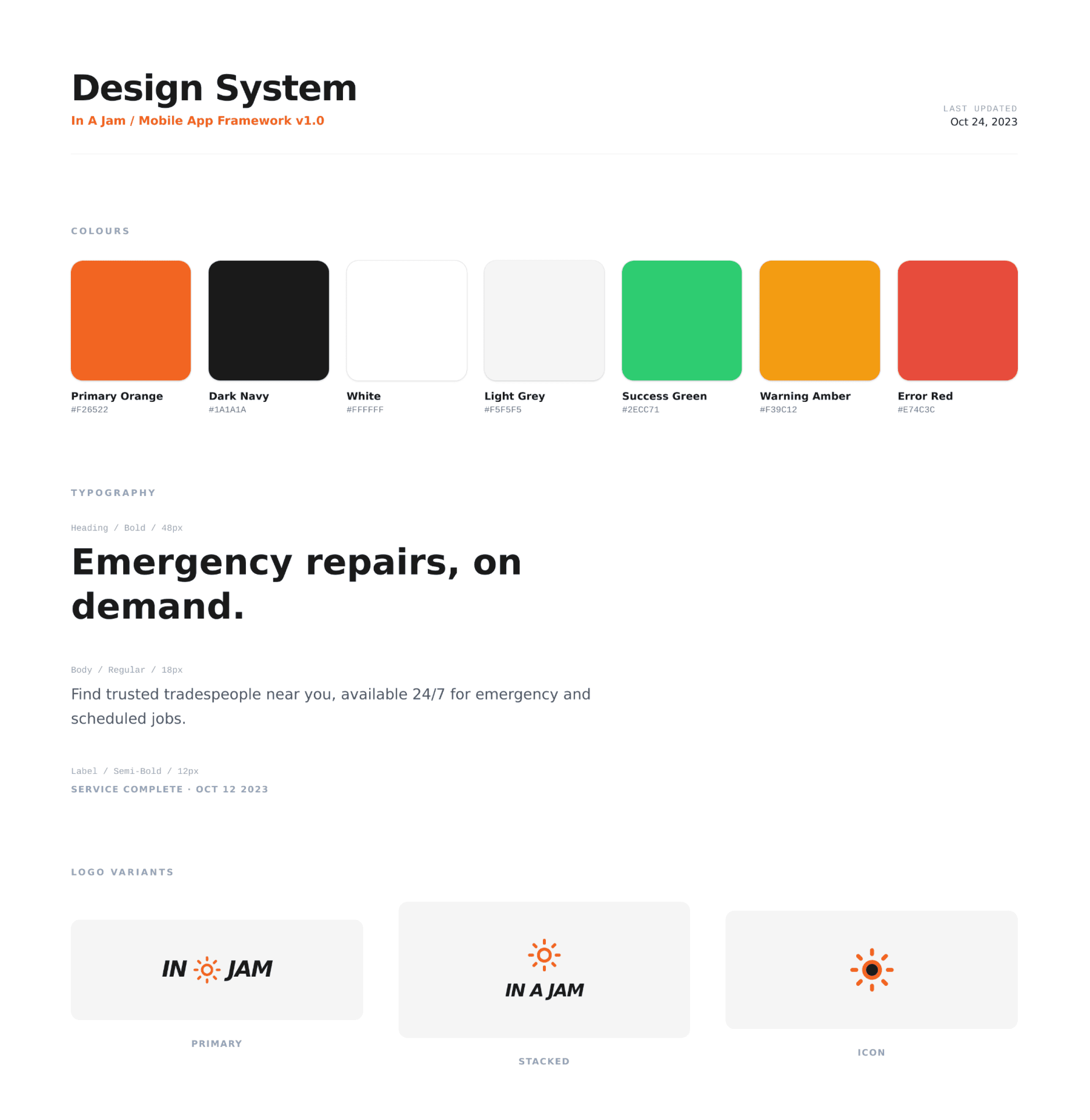
The most immediate challenge was the logo. The physical brand had multiple variations for different print contexts — embroidered patches, large-format signage, stamp marks. None of them worked at mobile scale without becoming illegible. Working closely with the brand designer, we simplified to two digital-only versions: a full wordmark for the app header, and a standalone sun icon for app icon and favicon use.
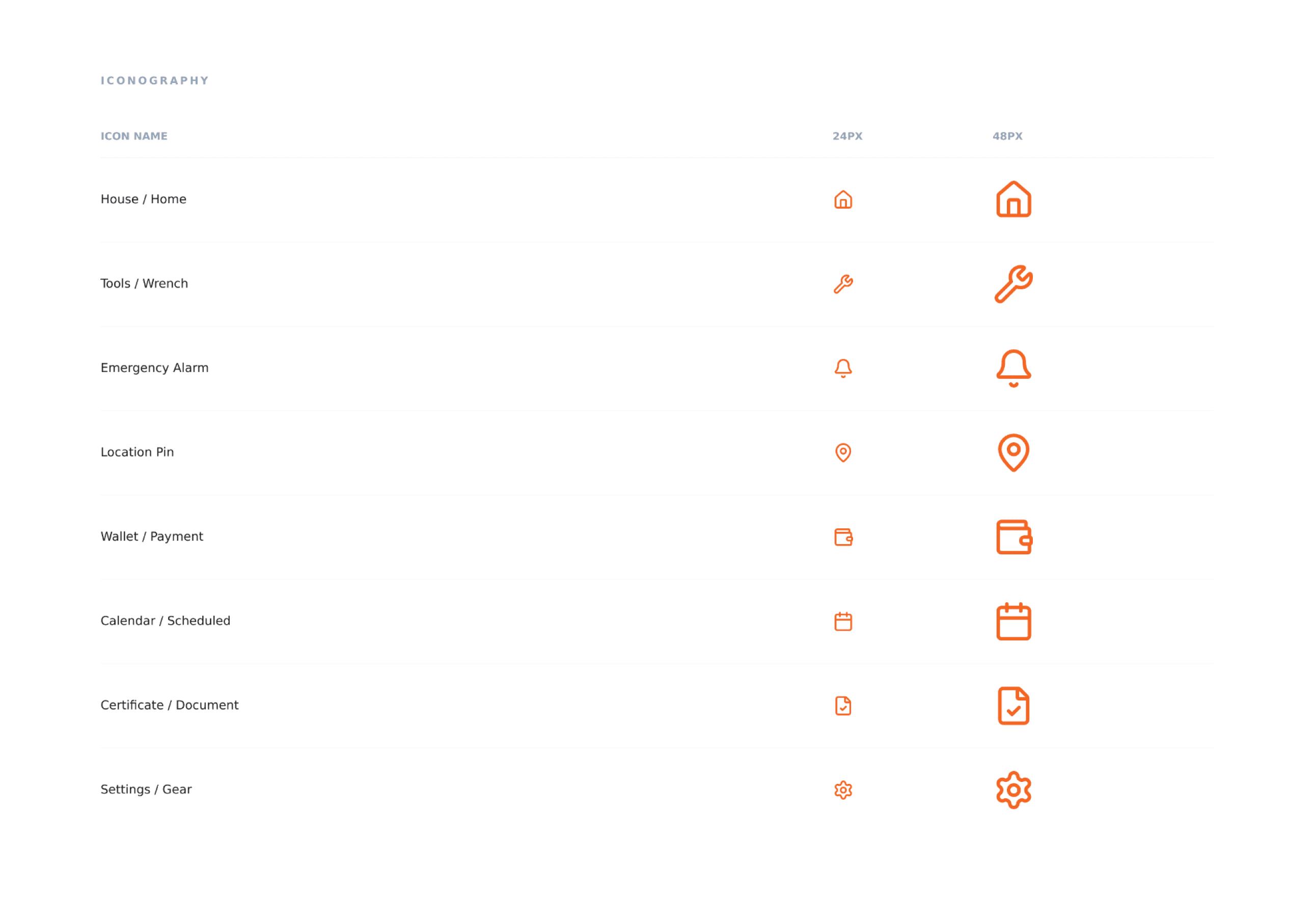
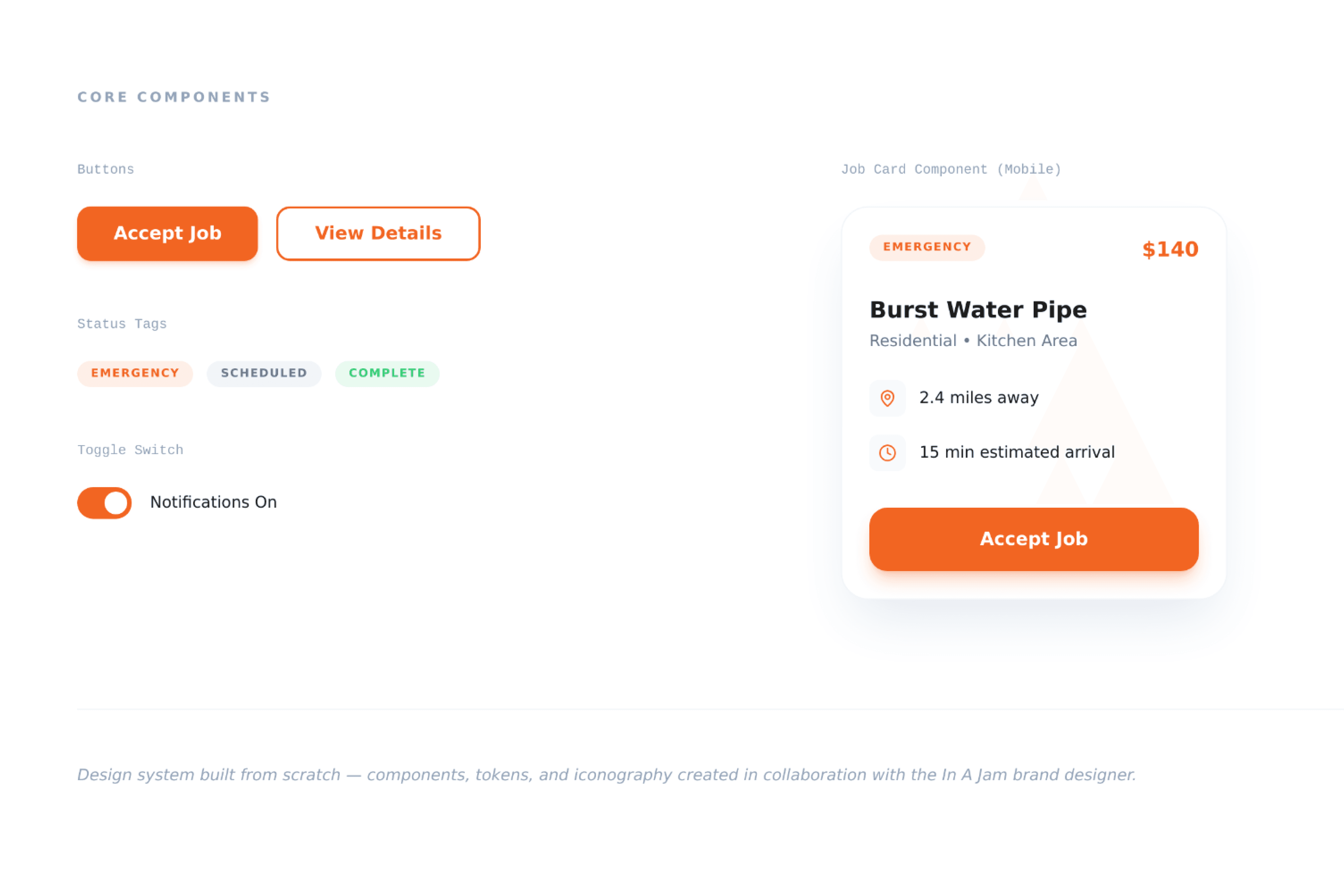
The same principle applied to the custom iconography created specifically for In A Jam. Icons designed to read from a distance needed to be redrawn with thinner strokes and more negative space to work at 24px. Orange — which commands attention on a workwear jacket — needed to be used sparingly in the UI, reserved for primary actions and status indicators only. Used everywhere, it overwhelmed. Used deliberately, it carried the brand without competing with the content.
The result was a design system that felt unmistakably In A Jam at every touchpoint — without the app feeling like a poster.
In A Jam launched on iOS and Android and has grown to over 15,000 users across the UK — connecting homeowners, landlords, and tradespeople on a single platform that didn't exist before.
Since launch, In A Jam has:
Been featured in Professional Builder magazine, one of the UK's leading trade publications
Won a Theo Paphitis Small Business Sunday award, a nationally recognised recognition for UK small businesses
Been recognised by the Business Elite Awards
Achieved ISO 14001 and ISO 27001 certifications — environmental management and information security standards that signal operational maturity well beyond a typical early-stage startup
The platform remains live and actively used, with the product continuing to evolve beyond the initial MVP I designed.
15K+
Active users
1K+
Downloads
4
Industry awards and certifications
1
Live platform, still growing
This was my first project in the UK property and trades space, and one of the most domain-heavy briefs I've tackled. What made it work was being honest about what I didn't know. Paul knew the trades. I knew design. Keeping that boundary clear made the collaboration unusually smooth for a project this complex.
If I could go back, I'd push for direct access to tradespeople and landlords earlier. Paul was an excellent proxy, but the landlord flow in particular went through more iterations than necessary because we were designing from domain knowledge rather than observed behaviour.
What I'm most proud of is simple: the product launched, found real users, and is still live. In early-stage work, that's not a given.



© 2026 Rana Fathi